 KnowThis
Key Takeaways
Key Takeaways
- 1Polymers are long chains built from repeating molecular units called monomers — chain length and structure, not just the base chemical elements, determine a plastic's properties.
- 2Thermoplastics can be melted and reshaped repeatedly because their chains aren't chemically bonded to each other; thermosets cross-link permanently during curing and can never be re-melted.
- 3Natural polymers — cellulose in plants, proteins, DNA, natural rubber — work by the exact same chain-linking principle as synthetic plastics; plastics industrialized the mechanism, they didn't invent it.
The concept
That thermoplastic-versus-thermoset split explains a lot of what you already know intuitively about plastic — some items warp in a hot car, others don't — but the numbers behind chain length make the mechanism concrete.
A plastic takeout container softens and can be reshaped when heated in an oven, but a hardened epoxy resin or an electrical outlet cover just chars instead of melting when overheated. Why the difference?
Worked examples
Example 1: Estimating a PET polymer chain's molecular weight (baseline case)
Example 2: Vulcanized rubber — a natural polymer chemically modified (edge case / variation)
Vulcanization heats natural rubber with sulfur. What does this process actually do to the rubber's polymer chains?
Example 3: Why recycling can't just melt every plastic together (real-world / applied case)
Curbside recycling programs sort plastics by their resin identification codes (the numbers 1 through 7 inside the recycling triangle) precisely because different polymer types can't simply be melted down together. PET (code 1) and HDPE (code 2), for example, have different melting points and different chain chemistries — mixing them in a single melt produces a weak, inconsistent material with neither plastic's original properties, sometimes called "downcycled" plastic that's only usable for lower-grade products like plastic lumber. Even within the same broad polymer family, thermoplastics can generally be reprocessed only with plastics of the identical resin type, which is exactly why sorting by code, not just tossing everything labeled "plastic" into one bin, matters for producing usable recycled material.
How it works (visual)
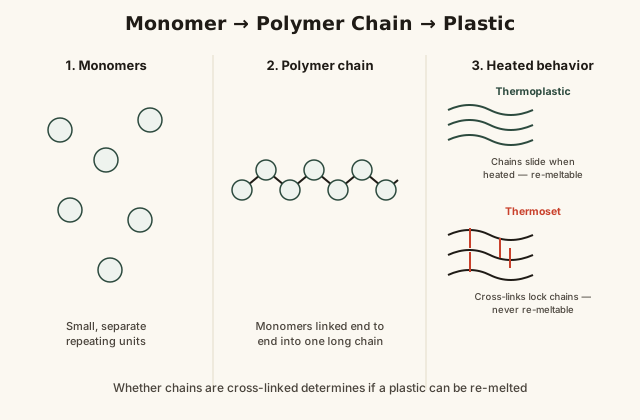
The middle panel is the core idea — polymerization is nothing more than repeatedly linking the same small monomer unit into a long chain. The right-hand comparison is what actually determines a plastic's real-world behavior: loose, unlinked chains (thermoplastic) can always be re-melted, while cross-linked chains (thermoset) are permanently locked together once cured.
Common mistakes
Common Mistakes
Assuming 'plastic' refers to one single material.
→ There are dozens of distinct polymer chemistries in common use — PET, HDPE, PVC, PP, PS, and more — each with very different melting points, flexibility, and chemical resistance.
Believing all plastic can be recycled the same way by simply melting it all together.
→ Thermosets can't be re-melted at all, and different thermoplastic resin types generally need to be sorted and processed separately to produce usable recycled material — mixing resin types weakens the result.
Thinking 'natural' materials don't involve polymers at all.
→ Cellulose in plant fiber, proteins, DNA, and natural rubber are all polymers — the chain-linking mechanism isn't unique to synthetic plastic, it's a general chemistry principle that nature has used for far longer.
Common misconception
“The numbered recycling triangle symbol on a plastic item guarantees it's recyclable in your curbside bin.”
The number inside the triangle is a resin identification code — it tells you which specific polymer the item is made from (1 for PET, 2 for HDPE, and so on), not whether your local recycling program actually accepts and processes that resin type. Actual recyclability depends on what a specific facility is equipped to sort and reprocess, which varies significantly by location and changes over time as facilities and markets for recycled resin shift. An item can carry a resin code and still not be accepted by a given curbside program.
A plastic container has a '5' inside the recycling triangle. What does that number actually tell you?
Try it yourself
What to do next
What to do next
- Check the resin code on a few plastic items around your home and see how many different polymer types you actually own.
- Next time something plastic warps in a hot car, connect it to thermoplastic chains softening under heat, and notice which items (like outlet covers) never do this.
- Try the molecular weight calculator above with different chain lengths to see how quickly total molecular weight scales with the number of repeating units.
- Read the related entry on Chemical Reactions & Everyday Chemistry to see how polymerization fits into the broader picture of how molecules combine.